



Formula 1 could be heading towards a return to its past, at least in terms of engine architecture. The FIA is continuing its efforts to reintroduce V8 power units and hopes to reach an agreement on the next generation of engine regulations within the coming months.
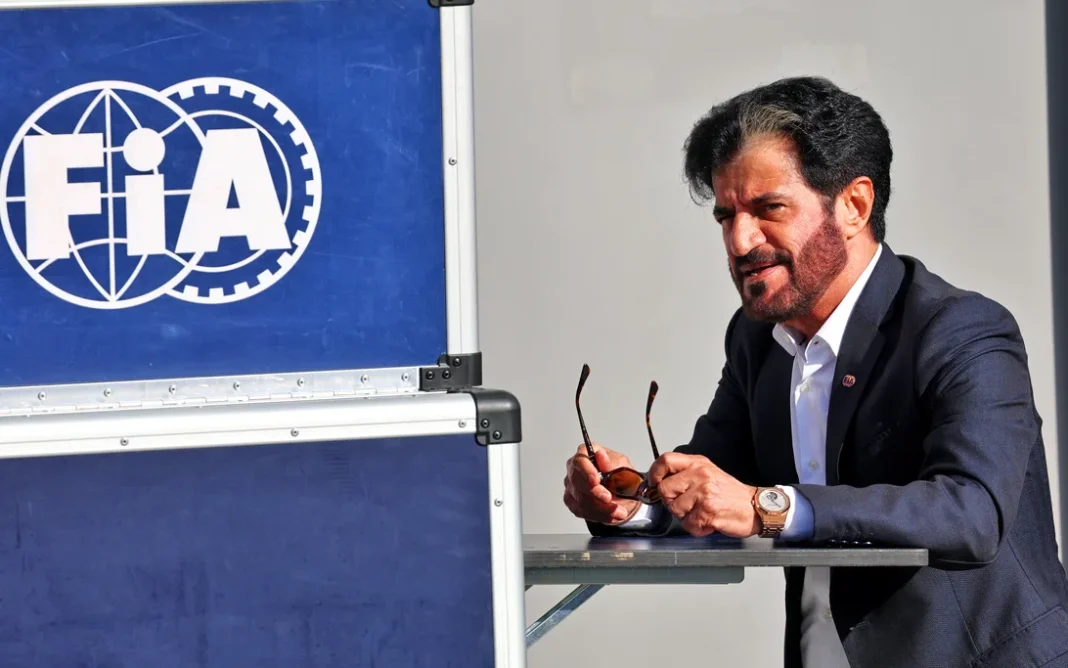
FIA president Mohammed Ben Sulayem has provided a fresh indication of the timeline for defining the sport’s future power unit regulations.
The proposal could see eight-cylinder engines return as early as 2030, although that date has yet to be confirmed. Before moving forward, the FIA must secure an agreement with the teams and, crucially, the manufacturers currently developing Formula 1’s hybrid power units.
Ben Sulayem Targets V8 Agreement Within Months
The FIA president explained that discussions with the relevant stakeholders have already reached an advanced stage.
Technical documentation outlining the proposed engine formula has been distributed to teams, team principals and power unit manufacturers, who are now assessing its feasibility.
Asked whether an agreement could be reached before the end of 2026, Ben Sulayem responded positively, suggesting that a decision could come within the next few months.
The governing body is now awaiting feedback from manufacturers, which will be essential in determining the specifications of the future engines and the time required to develop them.
Despite the FIA president’s optimism, the return of V8 engines has not yet received final approval.
Criticism of 2026 Engines Fuels the Debate
The discussions come during a season marked by controversy surrounding the technical regulations introduced in 2026.
The current power units retain the turbocharged V6 hybrid architecture but place significantly greater emphasis on electrical power than the previous generation.
Energy management has become one of the most important factors influencing performance, forcing drivers to adopt specific strategies to deploy and recover battery energy.
This characteristic has not convinced several leading figures in the championship.
Max Verstappen has been among the most outspoken critics, while Fernando Alonso, Lewis Hamilton and Lando Norris have also expressed concerns about the behaviour of the new cars and the increasing importance of energy management.
Their comments have intensified the debate over Formula 1’s future, encouraging the FIA to explore solutions that could simplify engine technology without abandoning its sustainability objectives.
Simpler V8 Engines Could Significantly Reduce Costs
One of the central objectives of the proposal is to reduce costs.
According to Ben Sulayem, returning to a simpler engine architecture could generate substantial savings in both the design and production of Formula 1 power units.
The FIA is targeting a cost reduction of approximately 50%, potentially achieved through reduced technical complexity and shorter development processes.
However, the governing body will need to establish clear regulations to prevent the pursuit of maximum performance from triggering another increase in spending.
Particular attention will be given to materials and manufacturing techniques, as even relatively small performance gains could encourage manufacturers to invest in extremely expensive technologies.
The challenge will be to find the right balance between performance, reliability and financial sustainability.
Bringing Back the V8 Sound and Lighter Formula 1 Cars
Alongside cost reduction, the FIA also wants to address two issues that have frequently featured in discussions about modern Formula 1: vehicle weight and engine sound.
Ben Sulayem believes less complex power units could help manufacturers produce lighter and more compact cars.
However, reducing weight must not become another expensive development race.
The FIA president has stressed the importance of setting realistic limits and avoiding technical solutions that significantly increase costs without delivering proportionate benefits.
Engine sound is another important consideration.
V8 engines were used in Formula 1 until the end of the 2013 season, before the championship introduced turbocharged V6 hybrid power units in 2014.
Their return would therefore represent a major change for fans who have long called for engines capable of delivering a more distinctive and exciting sound.
2030 Remains the Target, but Agreement Is Still Needed
During a recent event in Rwanda, Ben Sulayem identified 2030 as the potential year for the return of V8 engines.
His latest comments, however, make it clear that several important steps remain before the proposal can become reality.
The FIA must secure the necessary support from manufacturers and establish regulations that allow sufficient development time without creating excessive financial demands.
The final engine architecture, technical specifications and degree of electrification have yet to be agreed upon.
The potential use of turbocharging also remains under discussion.
The governing body wants to avoid introducing a major technical overhaul that would force manufacturers into excessive spending or make the proposed deadlines difficult to achieve.
Formula 1 Could Be Heading Towards Another Technical Revolution
The prospect of V8 engines returning represents one of the most significant changes currently being considered for Formula 1’s future.
After introducing a new generation of power units in 2026 with a much greater emphasis on electrification, the championship could adopt a different direction at the beginning of the next decade.
The FIA’s objective is to establish an engine formula that combines entertainment, sustainability, cost control and continued manufacturer involvement.
No final decision has been made, but discussions are progressing, and the coming months could prove decisive.
If the governing body reaches an agreement with teams and engine manufacturers, 2030 could mark the beginning of a new era for Formula 1, bringing back an engine configuration that played a major role in some of the championship’s most memorable seasons.