


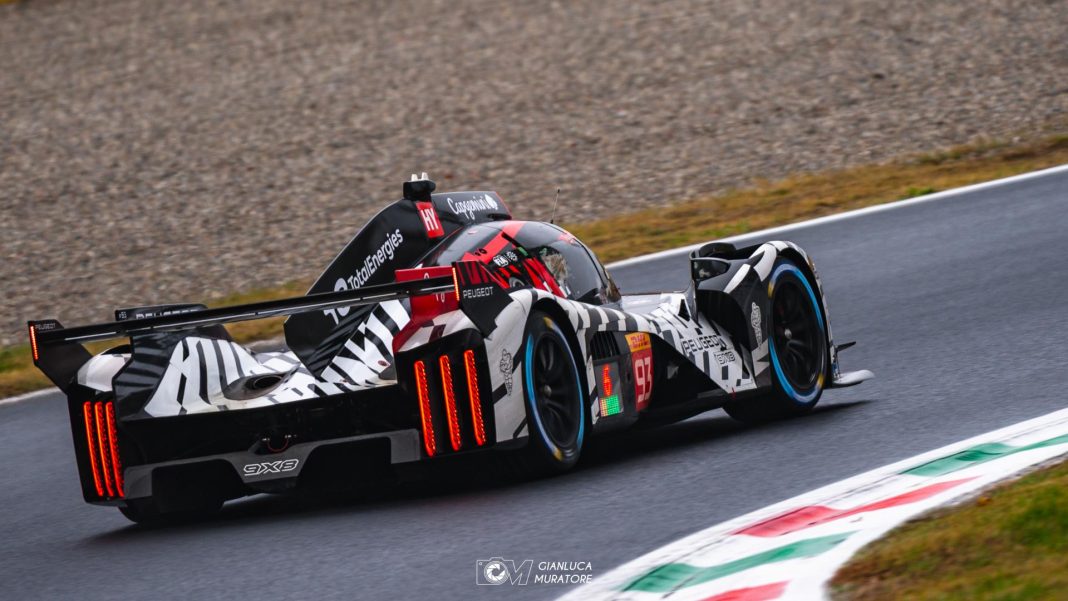

The world of motorsport has been rocked by news that is set to leave its mark. On Monday 23 November 2026, Stellantis formalised a major overhaul of its motorsport strategy, announcing the end of its official programmes in the FIA world championships. The decision directly affects Peugeot, which is withdrawing from the FIA World Endurance Championship with immediate effect, as well as the Citroën and Opel brands, which are set to leave Formula E in the summer of 2027.
Underlying this decision are the need to rationalise investments and the desire to focus greater resources on automotive product development, in line with the FaSTLAne 2030 strategic plan.
This is a particularly significant change of direction for a group which, in recent years, had made international motorsport one of its main tools for technological development and brand promotion.
Peugeot bids farewell to the WEC: the 9X8 project comes to an end
The most immediate consequence affects Peugeot, which is ending its participation in the Hypercar class of the World Endurance Championship after four seasons without an overall victory.
The French manufacturer, which returned to endurance racing in 2022, had pinned its hopes on the 9X8, a car initially characterised by innovative aerodynamic solutions and a technical approach that differed from that of its rivals.
Despite the investment and subsequent updates, the prototype had never managed to establish itself consistently at the top of the class, struggling to compete with Ferrari, Toyota, Porsche and the other leading teams in the championship.
Stellantis’ decision comes at a particularly delicate time. Peugeot was, in fact, working on a major evolution of the 9X8 for 2027, with the aim of resolving the car’s critical issues and making a definitive leap in performance.
The development programme was already at an advanced stage, with further testing planned for the winter and the driver line-up largely finalised for the following season. All the work carried out is now being halted, dashing the French brand’s hopes of a comeback in the top tier of endurance racing.
For Peugeot, this marks the second significant withdrawal from endurance racing following that of 2012, when the manufacturer discontinued the 908 programme for financial reasons.
Formula E: Citroën and Opel to withdraw after 2027
Whilst Peugeot’s withdrawal is immediate, Citroën and Opel will still have one more season to complete their respective programmes in Formula E.
Both brands will compete in the 2026–2027 championship – the first to be contested with the new Gen4 single-seaters – before leaving the electric category for good.
A surprising decision, especially given the investments already made by Stellantis to develop the new power unit for the Gen4 regulatory cycle.
Opel was preparing to make its debut in the series with a completely new team, having received the group’s go-ahead to set up its own motorsport project. The team had already signed Mitch Evans, from Jaguar, and Theo Pourchaire, the 2023 Formula 2 champion.
Citroën, on the other hand, had built a highly experienced team, relying on Nick Cassidy and Jean-Éric Vergne, two leading drivers in the series.
The withdrawal of the two brands is a major blow for Formula E, which risks losing four cars from the grid from 2028 onwards, potentially reducing the field from the current 24 cars to 20.
However, there remains a possibility for the team currently racing under the Citroën brand, whose sporting licence belongs to Monaco Sports Group and not directly to Stellantis.
Stellantis changes strategy: prioritising cost containment
The decision forms part of a wider industrial reorganisation of the automotive group, which is committed to improving its profitability and containing costs in an increasingly competitive international market.
Under the leadership of Chief Executive Antonio Filosa, Stellantis is redefining its priorities, favouring investments directly linked to the development of new models, product quality and the strengthening of its commercial presence.
Official motorsport competitions, characterised by high costs and financial returns that are difficult to quantify in the short term, no longer feature among the group’s strategic priorities.
The reorganisation also affects the Stellantis Motorsport facility in Satory, France, where over 200 employees work.
The group has stated its intention to retain and redeploy the staff concerned internally, identifying new opportunities in customer-focused motorsport activities, the development of high-performance cars and other business sectors.
Lancia and customer racing remain at the heart of the programmes
However, the withdrawal from the FIA world championships does not mean a complete abandonment of motorsport.
Stellantis intends to focus its resources on customer racing, a sector in which the group has a well-established presence, particularly in rallying through the Citroën, Peugeot and Lancia brands.
The Lancia programme in particular – centred on the Ypsilon Rally2 HF Integrale and customer-focused competitions – will continue to be a key component of the sporting strategy.
The technical expertise gained in competition will also be used to develop high-performance versions of road-going models, including the sports models from the Alfa Romeo and Maserati brands.
The Dodge programme for a return to the NASCAR Cup Series in 2027 also remains confirmed; this is managed independently by Stellantis’ North American division and is therefore not affected by the European reorganisation.
WEC and Formula E lose a key player
The consequences of this decision will be felt in both championships.
In the WEC, Peugeot’s withdrawal comes on top of that already announced by Alpine, reducing the presence of French manufacturers in the Hypercar class. Despite the expected entries from McLaren and Ford, the championship loses a historic endurance brand and one of the key players in the category’s recent expansion.
For Formula E, on the other hand, the issue mainly concerns the medium-term future. The withdrawal of Citroën and Opel comes right at the start of a new technical era, when the championship is focusing on Gen4 single-seaters to strengthen its position as the benchmark in electric racing.
Stellantis’ decision therefore represents much more than a simple review of its motorsport programmes. It signals how even the major automotive groups are now being called upon to reassess the relationship between investment in motorsport, technological development and economic sustainability.
For Peugeot, an ambitious chapter is drawing to a close, albeit one that has failed to deliver the long-sought victory. For Citroën and Opel, however, a final season in Formula E is beginning – one that is set to become a protracted farewell.