

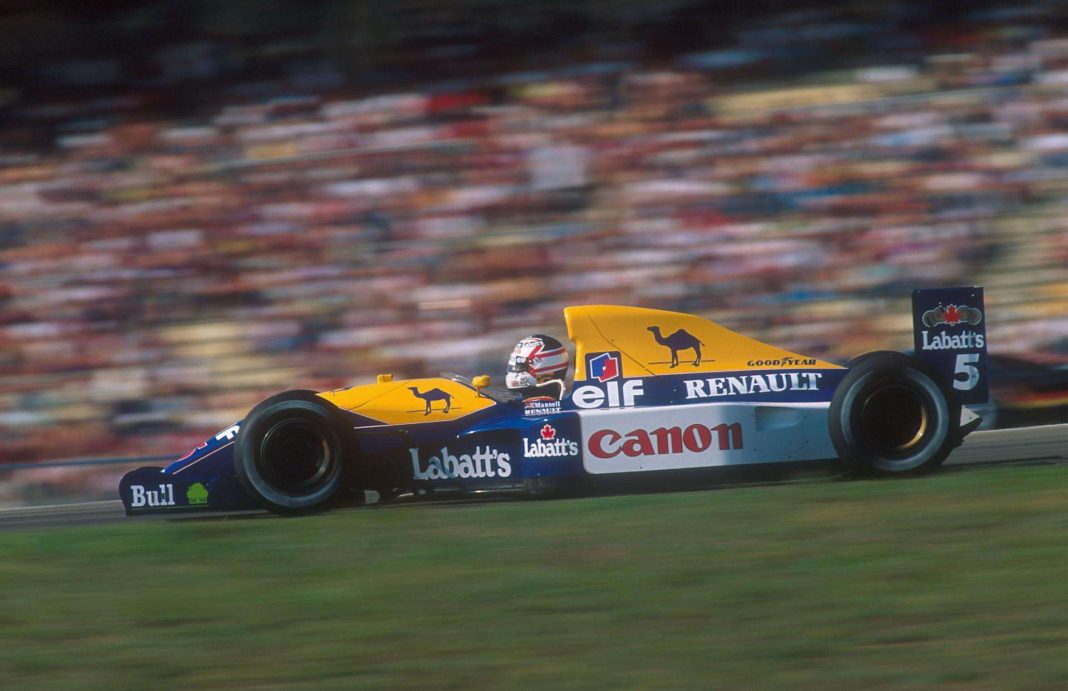

Few cars in Formula 1 history have dominated an entire season, and when it happens, it is often thanks to a groundbreaking innovation that sets them apart from the competition. Such advancements are so deeply integrated into the car’s design that rivals struggle to catch up or even copy the technology. Among these true F1 “game changers,” the Williams FW14B stands out as one of the most celebrated. Its blistering speed stemmed from aerodynamics, but only because it was perfectly supported by active suspension and a powerful Renault engine.
Individually, none of its features were revolutionary, but the combination of cutting-edge aerodynamics, hydraulics, and electronics created a package that was unmatched on the grid.
A new technological era in F1
To understand the FW14B, we need to set the stage for the 1992 season. Formula 1 had entered a new era: teams were larger, budgets were rising, and sophisticated development programs—especially in aerodynamics—were becoming essential. Wind tunnels were increasingly reliable, allowing teams to simulate real-world performance and refine designs before hitting the track.
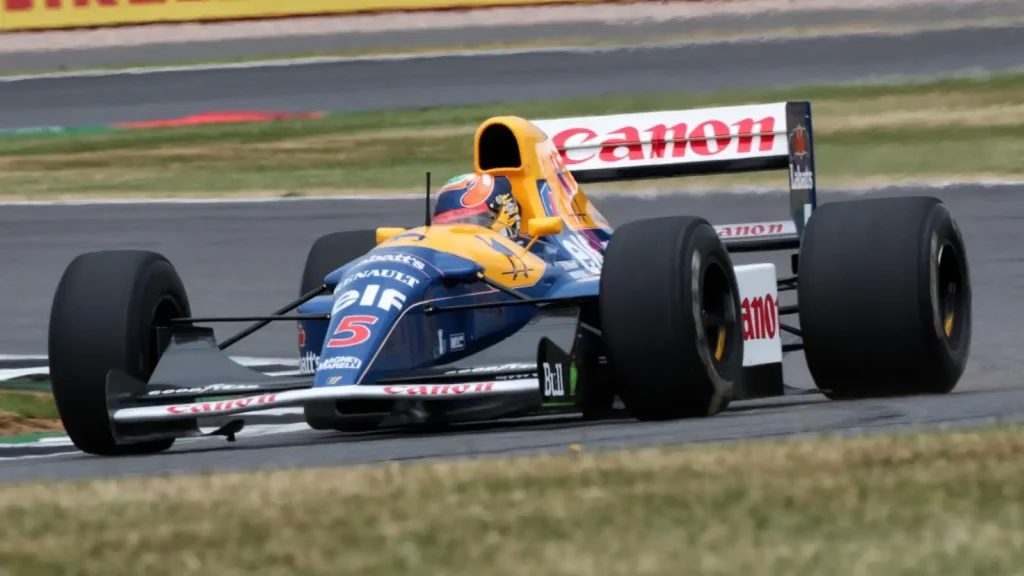
At the same time, cars were exploiting ground effect more aggressively. Ride heights were lower than ever, making suspension control critical, while raised noses and airflow management around the front tires were emerging as key performance factors.
Williams had experienced a quieter period after losing the Honda turbo engine in 1988, switching to the less powerful Judd V8. The team experimented with active suspension to compensate for the deficit and leveraged the Renault V10 from 1989 onward, achieving moderate success with the FW13. Meanwhile, Adrian Newey was making waves at Leyton House March with the CG891/901. Recognizing the need for aerodynamic innovation, Williams hired Newey to join Patrick Head in developing a new car.
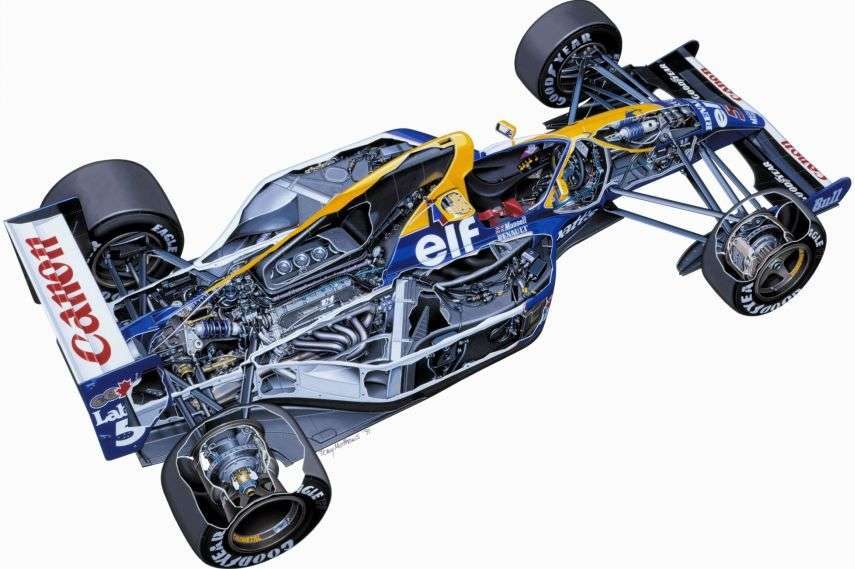
The result was the FW14, which, after resolving initial issues, evolved into the dominant FW14B of 1992.
Design and development
Williams Grand Prix Engineering was a full-fledged factory team capable of designing nearly every component in-house, from carbon-fiber chassis to gearboxes and electronics. Aerodynamically, the team initially used a third-party wind tunnel at Southampton but opened its own facility in 1991, greatly expanding development capabilities.
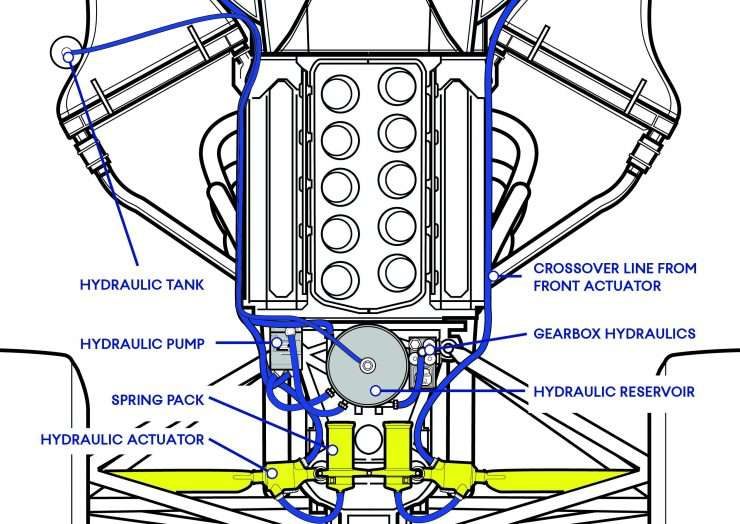
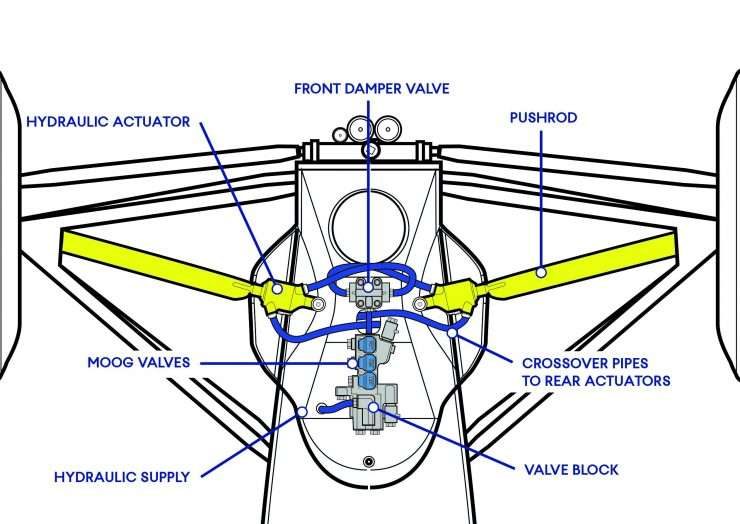
Newey’s vision was to unify aerodynamics, active suspension, and engine power into a single cohesive package. The active suspension system allowed the car to maintain optimal ride height at all times, maximizing ground-effect downforce while keeping the car stable over bumps and during cornering. This, coupled with a high-powered Renault V10, gave Williams a decisive edge.
Chassis and layout
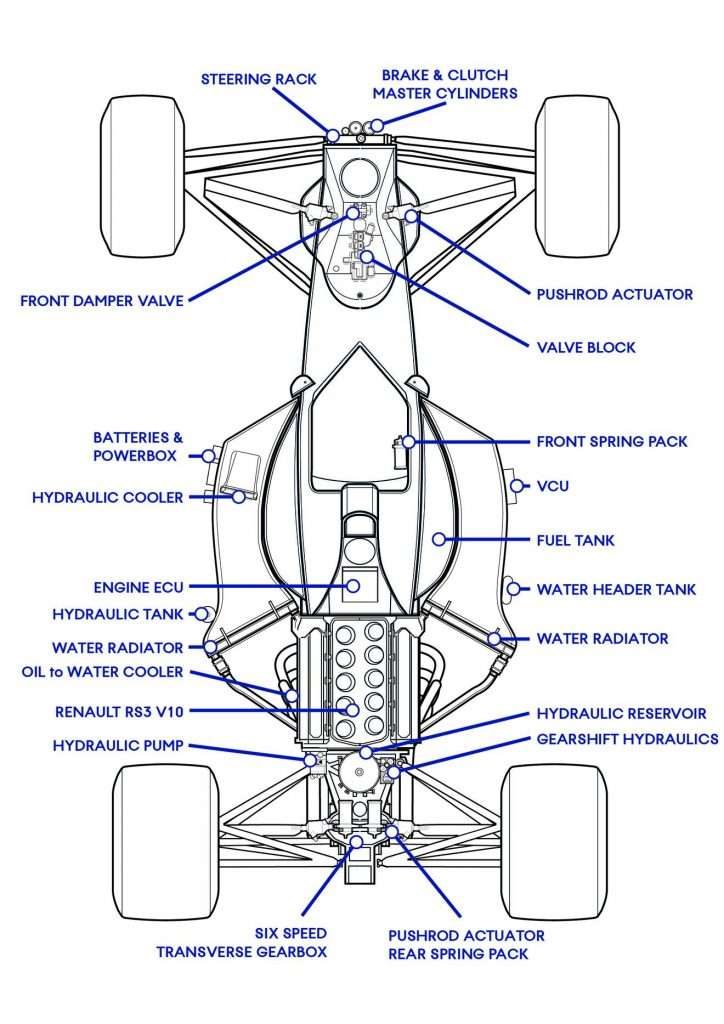
The FW14B featured a conventional monocoque layout but with key innovations: a raised nose, a compact cockpit, and integrated suspension and crash structures. The raised nose improved airflow to the flat underbody, generating massive downforce while maintaining stability. The cockpit design, narrow and elevated, enhanced both aerodynamics and rigidity. The absence of a conventional gear lever allowed the use of a very small steering wheel, which Mansell and Patrese handled with ease.
Aerodynamics
Aerodynamics were the cornerstone of the FW14B’s performance. The flat floor extended to a multi-element rear diffuser, optimized thanks to active suspension, which kept ride heights within a narrow range. Front wings employed an anhedral design to maximize airflow to the floor, and wing endplates managed disturbed air from the front tires, improving efficiency and stability.
Active suspension and paddle shifts
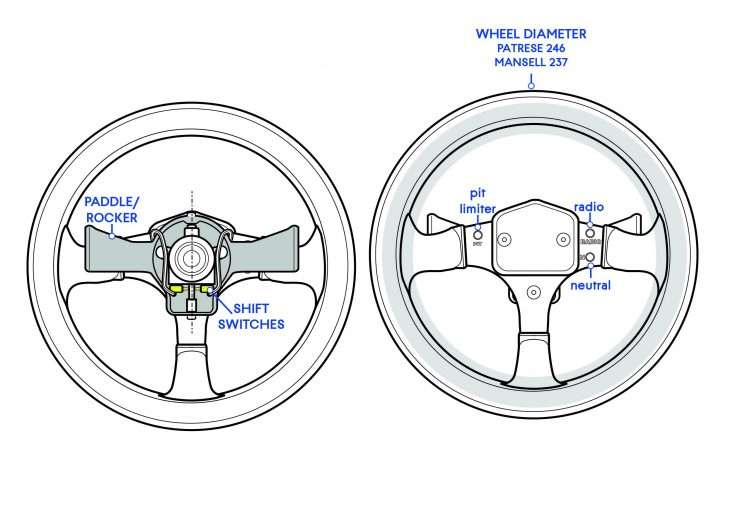
active system, controlled by hydraulics and electronics developed by Paddy Lowe, regulated ride height dynamically in roll and pitch. This innovation also allowed advanced solutions like lowering the rear at high speeds to reduce drag. The semi-automatic paddle-shift gearbox, hydraulically actuated, enabled fast and reliable gear changes while improving driver focus.
Renault V10 engine
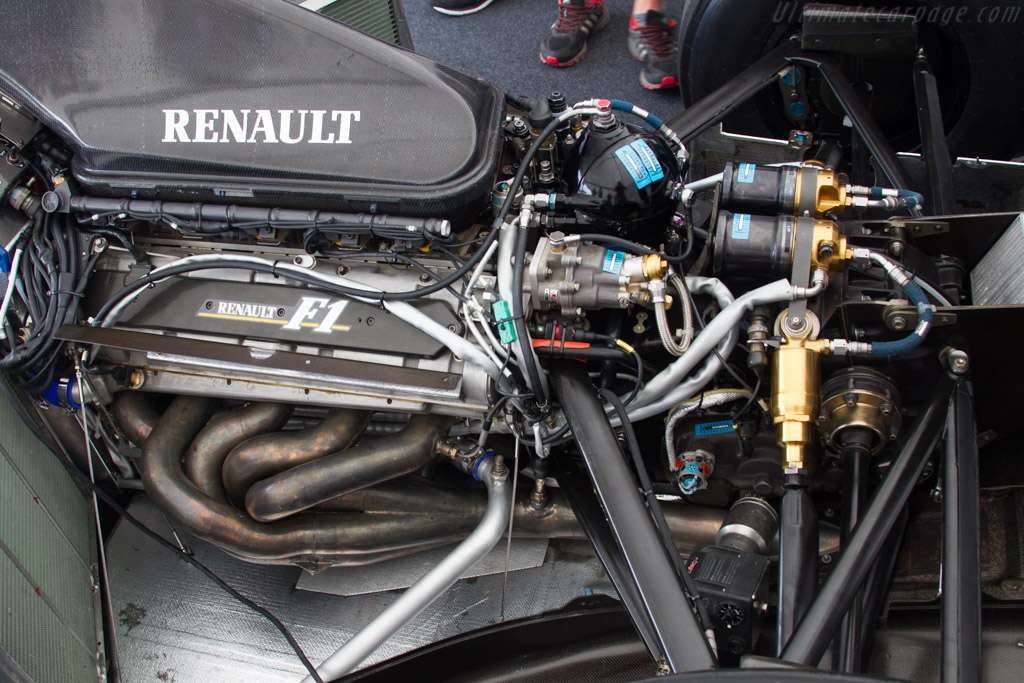
The Renault V10 offered a perfect compromise between power and weight, with advanced electronic fuel and ignition control, traction control, and compact cooling systems. Despite sophisticated electronics, throttle operation remained mechanical, giving drivers direct feedback.
Cockpit and driver interface
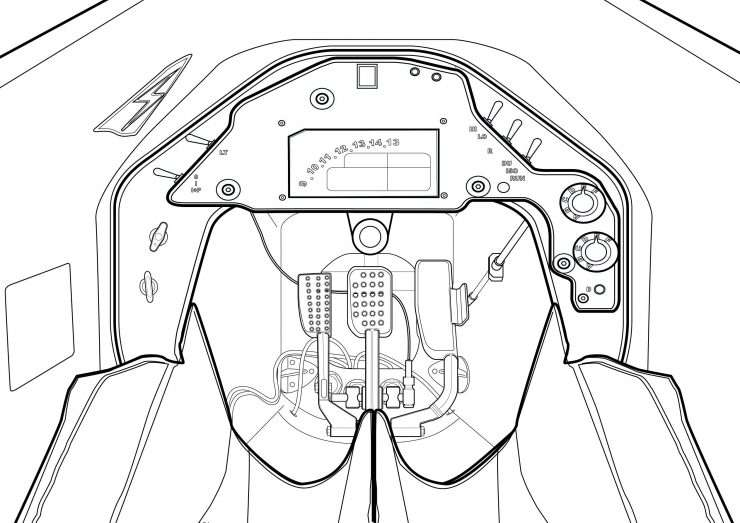
Inside the FW14B, drivers found a compact but comfortable environment. The seat was padded and assembled in two halves to fit the small cockpit opening. The tiny steering wheel featured paddle shifters, buttons, and switches for engine maps, traction control, and active suspension, marking the evolution toward the multifunction steering wheels seen in modern F1.
The Williams FW14B didn’t just dominate a season—it redefined the technological landscape of Formula 1. Its integration of aerodynamics, hydraulics, and electronics created a blueprint that influenced generations of race cars to come.
Williams FW14B Technical Specifications
| Model | Williams FW14B |
|---|---|
| Year | 1992 |
| Team | Williams Renault |
| Designers | Patrick Head, Adrian Newey |
| Chassis | Carbon fiber monocoque and composites |
| Engine | Renault RS3C / RS4 |
| Engine configuration | 67° V10 naturally aspirated |
| Displacement | 3,493 cc |
| Power | ~760–800 hp |
| Engine position | Longitudinal mid |
| Gearbox | Williams semi-automatic sequential, 6-speed |
| Drive | Rear |
| Suspension | Double wishbone, push-rod, active |
| Brakes | Carbon (AP / Carbone Industrie) |
| Minimum weight | ~505 kg |
| Wheelbase | 2,921 mm |
| Front track | 1,803 mm |
| Rear track | 1,676 mm |
| Wheels | 13” front / 13” rear |
| Fuel | ~230 liters |
| Electronics | Active suspension, traction control, telemetry |
| Wins (1992) | 10 |
| Pole positions | 15 |
| Titles | Drivers’ Champion (Mansell), Constructors’ Champion |
1992 Race Results
| GP | Circuit / Country | Mansell | Patrese |
|---|---|---|---|
| 1 | South Africa | 1st | 2nd |
| 2 | Mexico | 2nd | 3rd |
| 3 | Brazil | 1st | 3rd |
| 4 | Spain | 1st | 2nd |
| 5 | San Marino | 1st | 4th |
| 6 | Monaco | 2nd | 3rd |
| 7 | Canada | 1st | 2nd |
| 8 | France | 1st | 3rd |
| 9 | Great Britain | 1st | 4th |
| 10 | Germany | 2nd | 1st |
| 11 | Hungary | 1st | 2nd |
| 12 | Belgium | 1st | 5th |
| 13 | Italy | 1st | 2nd |
| 14 | Portugal | 1st | 3rd |
| 15 | Spain (European GP) | 1st | 2nd |
| 16 | Australia | 2nd | 1st |